
In bulk material handling, choosing the right valve is about more than controlling flow. It affects reliability, safety, and overall system performance.
Selecting the correct valve for bulk solids is essential, whether you’re designing a new system or upgrading an existing one. A mismatch can lead to expensive downtime, accelerated wear, leaks, and contamination.
In this post, we’ll walk through core selection criteria, compare common valve types used in powder and granule systems, and share mistakes engineers and integrators often make.
Throughout, we’ll draw on Roto-Disc’s decades of experience building custom solutions that solve the toughest flow challenges engineers face.
What Is a Bulk Solids Valve?
A bulk solids valve is a mechanical device designed to control the flow of dry materials, like powders, pellets, granules, and abrasive solids, through a process system.
These valves are used in pneumatic conveying, gravity feed, blending, batching, and discharge applications, and they must manage both the material’s behavior and system pressures without compromising containment or performance.
Valves used for bulk solids differ from valves used for air or liquids. Solids have mass, friction, and cohesion, which can cause them to bridge, pack, or abrade internal components if the wrong design is chosen. The right valve accommodates those characteristics while maintaining flow efficiency and minimizing maintenance.

Factors to Consider When Selecting a Valve for Bulk Solids
Selecting the right valve isn’t a one-size-fits-all exercise. It starts with understanding the material and operating conditions your system will encounter.
Material Characteristics
Material behavior is the starting point for selecting a bulk solids valve. Abrasiveness, cohesiveness, particle size, moisture content, and temperature all affect how a material moves through a valve and how quickly components wear. Some materials erode sealing surfaces, while others tend to stick or build up, restricting flow.
Bulk materials range widely in behavior:
- Abrasive: Hard particles that wear away valve surfaces quickly.
- Sticky or cohesive: Powders that cling and bridge under shear.
- Free-flowing: Materials that move easily through chutes and valves.
Understanding these characteristics early helps ensure the valve design and materials are suited for long-term performance, not just initial operation.
System Conditions
System operation plays a major role in how a valve performs. Pressure and vacuum conveying systems place different demands on sealing, while continuous processes require valves that can withstand frequent cycling without compromising reliability.
Batch systems may place greater emphasis on tight shutoff and controlled flow. Consider the following:
- Pressure vs. vacuum: Does the system use pneumatic conveying or gravity feed?
- Continuous vs. batch operation: Some valves perform better in high-cycle systems.
- Flow rate and frequency: Higher throughputs may require larger or more robust designs.
Matching the valve to both material behavior and system demands prevents problems like leakage, clogging, or premature wear.

Application Requirements
Application-specific needs further refine valve selection. Sanitary environments require valves that support effective cleaning and limit material buildup. Systems handling multiple products must also account for cross-contamination and changeover requirements.
Environmental factors such as washdown frequency and cleaning agents can affect material and seal choices.
Addressing these needs upfront helps ensure reliable performance over time:
- Sanitary or hygienic requirements: Food and pharmaceutical lines need CIP (clean-in-place) and contamination control.
- Cross-contamination concerns: If multiple products run through a single line, the internal valve geometry matters.
- Washdown or cleaning protocols: Some valves thrive with frequent cleaning; others don’t.
Common Valve Types Used in Bulk Material Handling
While several valve types are commonly used in bulk material handling, performance varies significantly depending on material behavior, system pressure, and operating demands.
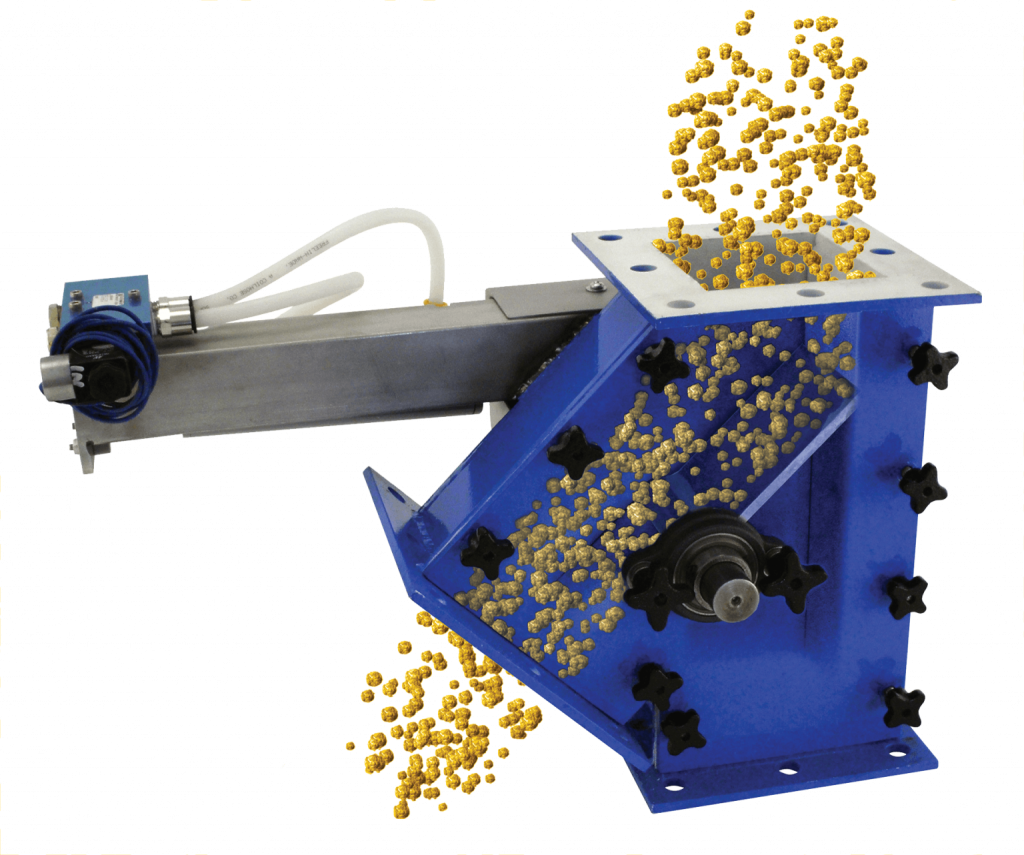
Diverter Valves
Diverter valves redirect material flow from one line to another. In bulk solids systems, they are essential for applications that require routing product to multiple destinations, such as silos, bins, or downstream processes.
When properly designed, diverter valves help:
- Route material efficiently without stopping the system.
- Reduce manual intervention and changeover time.
- Maintain flow continuity in pneumatic and gravity systems.
However, traditional diverter designs can struggle with leakage, internal wear, or material buildup, especially in abrasive or high-velocity conveying.
Roto-Disc diverter valves are engineered specifically for bulk solids handling, using smooth internal geometry and robust sealing to reduce degradation and maintain consistent performance over time.
Rotary Airlock Valves
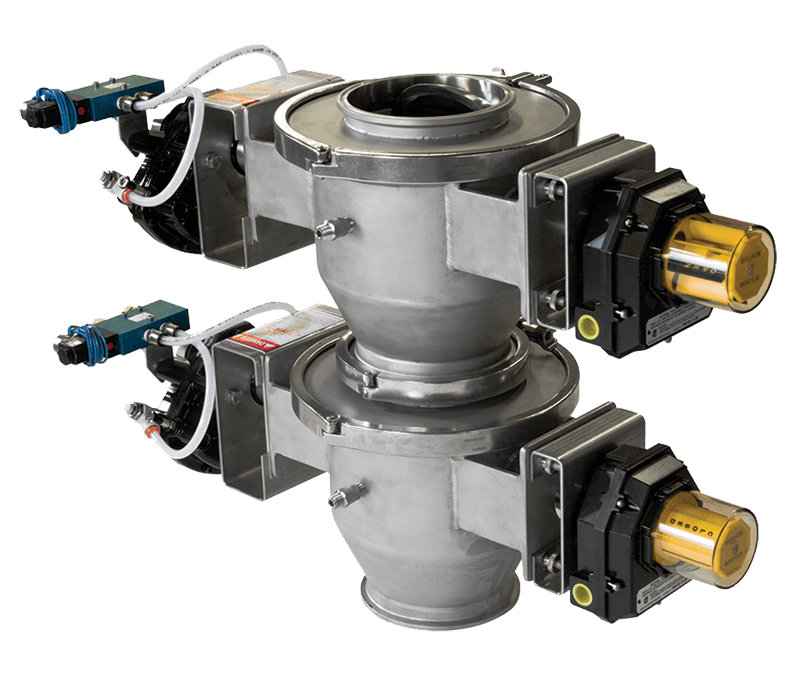
Rotary airlock valves, also known as rotary feeders, serve a dual role by feeding material while maintaining a pressure differential between system zones. They are commonly used in pneumatic conveying applications where a consistent material feed is required.
Strengths of rotary airlock valves include:
- Continuous feeding of material into conveying lines.
- Reliable performance with fine, free-flowing powders.
Limitations become apparent when materials are abrasive or when sealing is needed. Over time, internal clearances can wear, leading to air leakage, reduced efficiency, and increased maintenance. In these cases, rotary valves may not provide the long-term reliability required for demanding bulk solids applications.
Roto-Disc rotary airlock valves remain an ideal choice when metering is the primary goal and material conditions are relatively mild. However, they’re often complemented or replaced by spherical valves or engineered diverter valves that provide tighter sealing, improved wear resistance, and better performance under pressure or abrasive conditions.
Spherical Valves
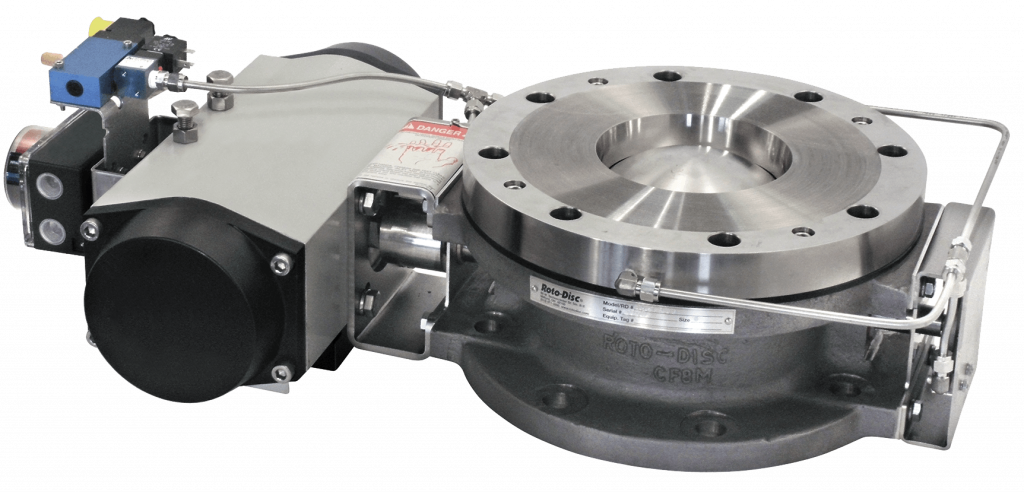
Spherical valves are often the preferred solution for bulk solids systems that demand tight shutoff, minimal leakage, and resistance to wear. Roto-Disc heavy-duty spherical valves rotate a solid sphere to open or close the flow path, creating a reliable seal even in abrasive or sticky material conditions.
Advantages include:
- Positive shutoff that minimizes leakage and blow-by.
- Robust construction that resists abrasion and material buildup.
- Longer service life in high-cycle and high-wear applications.
Because of their sealing performance and durability, spherical valves frequently outperform traditional ball or butterfly valves in bulk solids handling.
These valves are particularly well-suited for applications that require material containment and high system efficiency, such as pneumatic conveying systems and pressure-isolation points.
Matching the Right Valve Type to Your Application
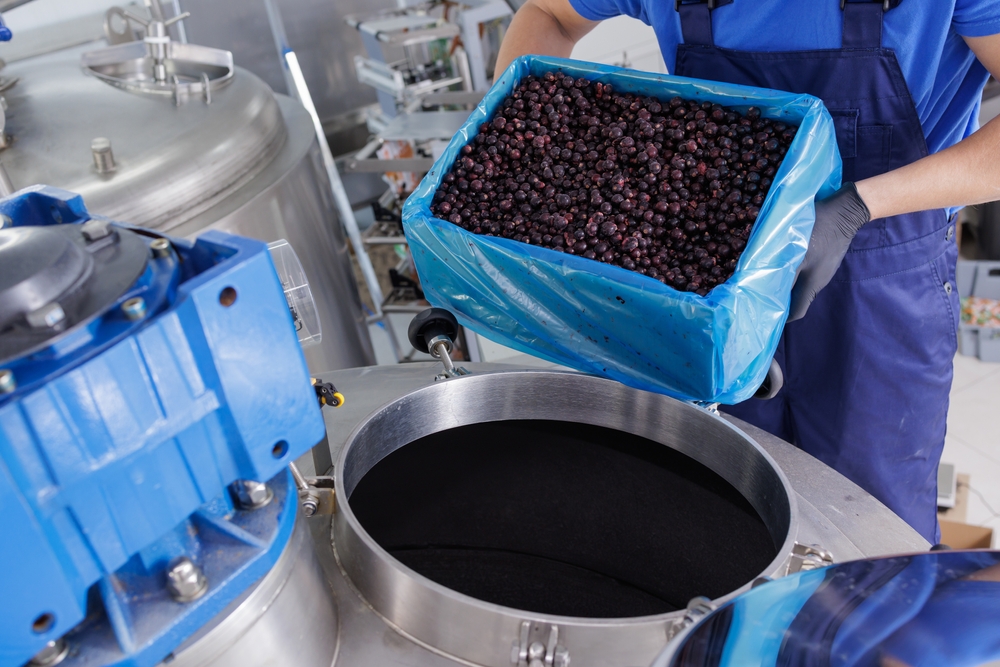
Once you understand material and system demands, it’s time to match them to a valve type:
Abrasive Materials
For abrasive powders and granules, focus on valves made of hard materials and with wear protection. Spherical valves often perform best here due to their sealed design and robust construction.
Sanitary Ingredients
In food, beverage, and pharmaceutical processes, choose valves with minimal dead zones, smooth internal surfaces, and easy clean-out features.
High-Pressure Conveying
In pneumatic systems operating under high pressure or vacuum, valves must maintain a reliable seal while material is in motion. Spherical or engineered diverter designs are specifically built to preserve pressure integrity throughout operation.
| Application Requirement | Diverter Valves | Rotary Airlock Valves | Spherical Valves |
|---|---|---|---|
| Material routing | Designed to redirect material to multiple destinations | Not intended for routing | Typically used for isolation |
| Continuous feeding | Not designed for metering | Provides consistent, controlled feed | Not used for feeding |
| Abrasive materials | Effective with engineered sealing | Wear increases over time | Highly resistant to wear |
| Leakage control | Depends on design and application | Leakage increases as clearances wear | Provides a tight shutoff |
| Pressure or vacuum conveying | Commonly used in pneumatic systems | Maintains pressure differential | Performs well under pressure |
| Sticky or cohesive materials | Works with smooth internal geometry | Risk of buildup and plugging | Resists material buildup |
| Maintenance demands | Moderate with proper design | Higher due to internal wear | Lower over service life |
| Typical use case | Routing material in conveying systems | Metering free-flowing powders | Isolation and shutoff in demanding service |
Common Valve Selection Mistakes to Avoid
Even experienced engineers can misstep when choosing a valve. Some frequent pitfalls include:
Choosing Based on Price Alone
Lowest cost rarely equals best value. A valve that fails prematurely will cost more in downtime and maintenance than a well-chosen, durable solution.
Ignoring Material Behavior
Valve selection must be driven by how the material behaves, not just its name or category.
Overlooking Maintenance Access and Seal Wear
Difficult access or poorly chosen seal types lead to longer maintenance windows and higher labor costs.
Specifying Without Engineering Input
Defining technical requirements early in the specification stage helps prevent mismatches that can compromise performance.

Why Engineering Support Matters in Valve Selection
Valve selection isn’t just about picking a component. It’s about integrating that component into a reliable system. Engineers, OEMs, and system integrators benefit when valve manufacturers, like Roto-Disc, provide technical support during specification.
CAD files, material recommendations, and coating options tailored to specific applications reduce guesswork and deliver solutions that work from day one. Working with Roto-Disc helps engineers optimize:
- Material compatibility
- Seal selection
- Cycle timing and actuation
- Lifecycle costs
Roto-Disc’s engineering team partners with clients to ensure designs align with actual operating conditions, not just nominal specs.
Frequently Asked Questions About Bulk Solids Valve Selection
Start by understanding the material’s characteristics, including abrasiveness, cohesiveness, and particle size, and then match your system conditions (pressure/vacuum, flow rate) with valve designs capable of meeting those needs. Evaluate seal performance, cleanability, and long-term durability before settling on a type.
Common types include diverter valves for routing, rotary airlock valves for continuous feeding under pressure differentials, and spherical valves for tight sealing under abrasive or sticky conditions. Choice depends on system goals and material behavior.
Valves with robust sealing surfaces and wear-resistant materials, like heavy-duty spherical valves, tend to outperform traditional designs in abrasive service by reducing leakage and wear points that erode under harsh conditions.
Use diverter valves when you need to direct material flow between multiple destinations, such as bins, hoppers, or processing lines, without stopping the system or manually rerouting product paths.
Inadequate sealing design, valve seat wear, or material bridging at interfaces are common causes of leaks. These issues can be mitigated by matching the valve design to the material’s behavior and establishing proper maintenance intervals.
In some cases, yes, if the materials behave similarly and operate within the same pressure, moisture, and temperature ranges. For disparate materials, a custom-engineered solution is often more reliable.
How Roto-Disc Helps Engineers Select the Right Valve
Roto-Disc, Inc. has been manufacturing custom industrial valves, diverters, and airlocks since 1984. Each product is built to order in the U.S. and engineered to meet specific application demands, whether that’s abrasion resistance, pressure isolation, or sanitary design.
With solutions ranging from heavy-duty spherical valves to engineered diverter designs, Roto-Disc combines material expertise with system understanding, giving engineers confidence in their selections.
Talk to an Engineer Before You Specify
Selecting the right valve for your bulk solids application can make or break system performance. If you’re evaluating options or unsure which design best fits your material and process, Roto-Disc’s engineering team can help.
Connect with us today to discuss your application, review designs, and get tailored recommendations that will deliver the lasting performance for your system!