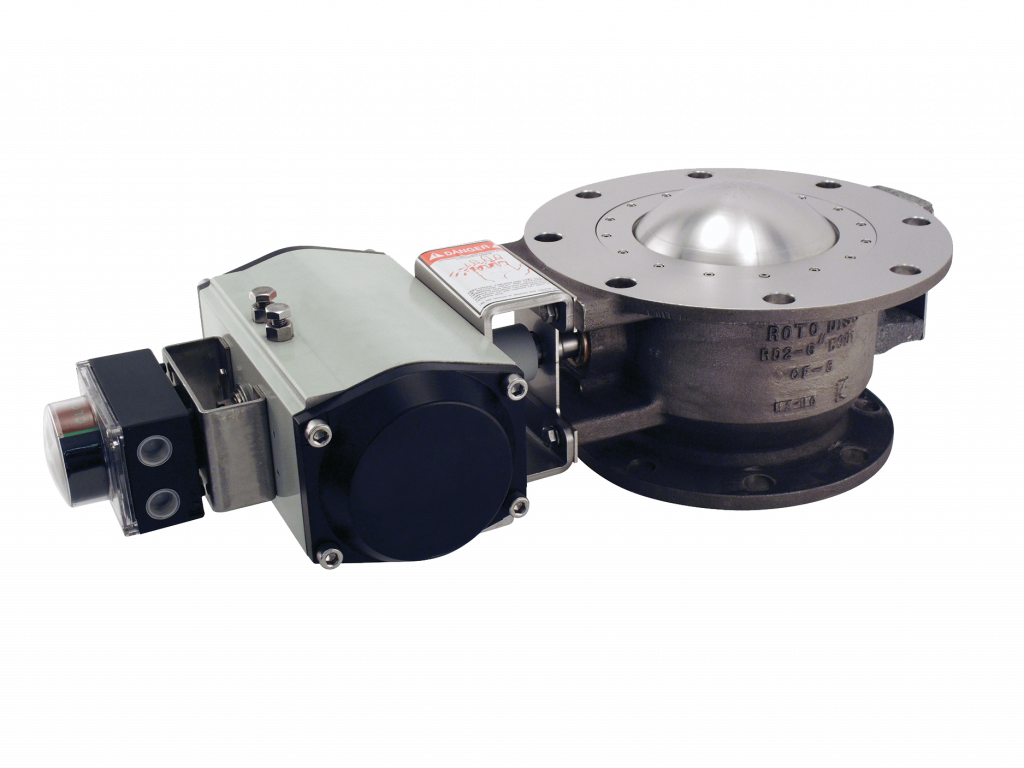
Roto-Disc®II
Lighter-Weight Spherical Valve
In a Flash:
- Same essential features as the original Roto-Disc® spherical valve
- Lighter weight body design
- Outlet opening and flange match valve size
Materials of Construction
Body & Dome:
Stainless Steel (304, 316, Duplex), Hastelloy-C, Inconel, Monel, Carbon Steel (4140, WCB, A36), Other alloys upon request
Soft Seats:
Reinforced PTFE (glass fiber, 316SS fiber, carbon fiber), PEEK, Ertalyte, UHMW, Other engineered plastics
Metal Seats:
Stainless Steel (304, 316, Duplex), AR400 Abrasion Resistant Steel, Hastelloy-C, Inconel, Monel, Other alloys upon request
Coatings & Hardfacings:
Electroless Nickel, Stellite, Hard Chrome, Thin-Dense Chrome, Tungsten Carbide, Teflon®/PFA, Others
Typical Applications
- Blender Discharge
- Vacuum Dryer Discharge
- Hopper/Weigh-scale Discharge
- Loss-In-Weight Feeder Refill
- Bulk-bag Unload
- Vacuum Receiver Discharge
Pressures and Temperatures
- Pressures Range‡: Full vacuum to 50psig below valve. Full vacuum to one bar above valve.
- Temperature Range‡: -40°F – 1200°F (-40°C – 650°C).
‡ Pressure and temperature limits of an individual valve depend on a variety of application conditions and materials of construction of the valve
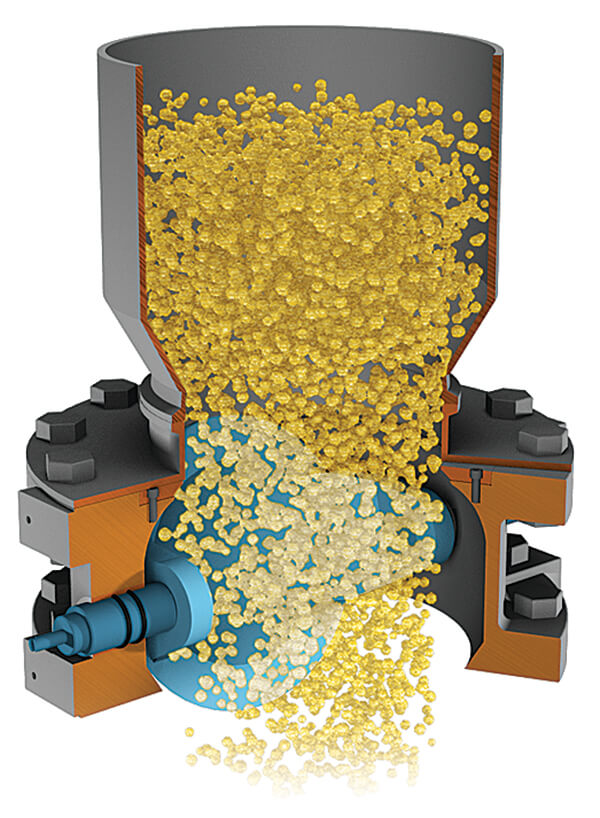
Roto-Disc® totally open:
Material falls unobstructed through the inlet opening. Nothing in the flow stream causes product bridging, so you get the full flow capacity of the valve. Notice that the sealing surfaces are protected from direct contact with material.
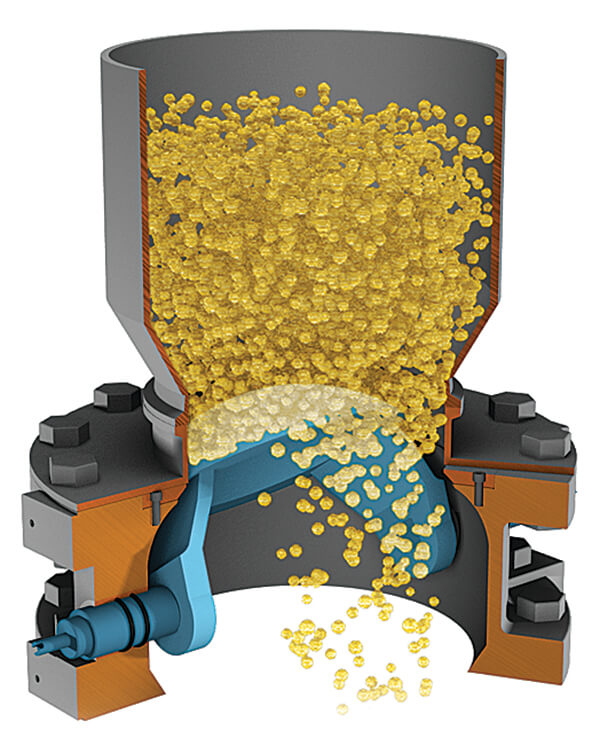
Roto-Disc® closing:
As the valve begins to rotate closed, the dome wipes against the seat, cutting off the flow of product and pushing material above or below the valve instead of wedging it between the dome and seat. The design naturally resists abrasive wear, and there are no pinch points or areas where material can hang up.
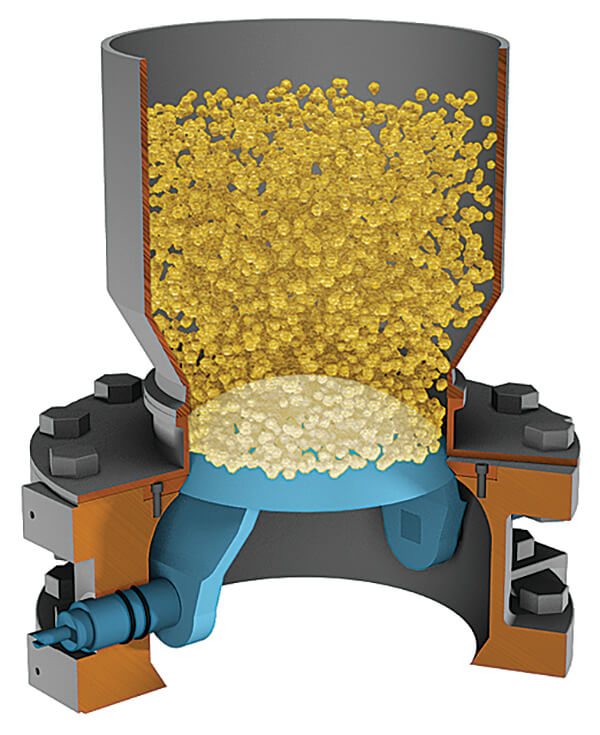
Roto-Disc® fully closed:
Closure is clean, and the valve is fully seated. The dome and seat form a positive seal, eliminating leakage across the seat. Double O-rings prevent leakage through the stems.
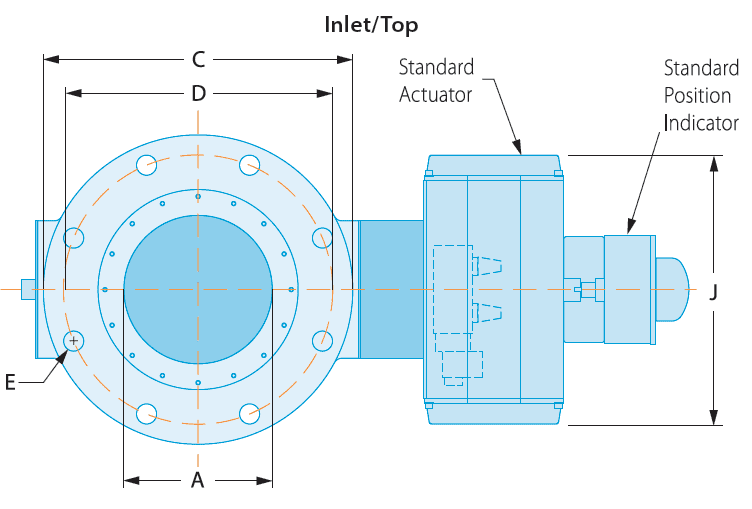
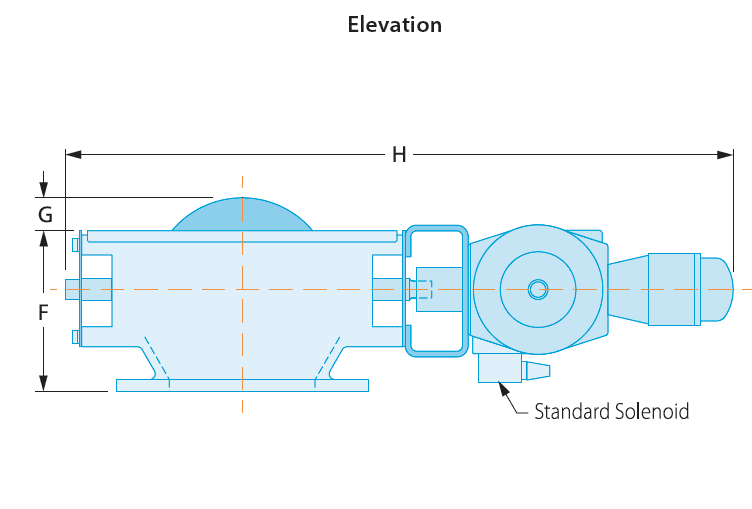
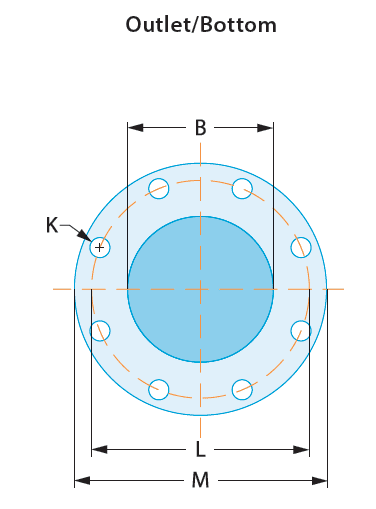
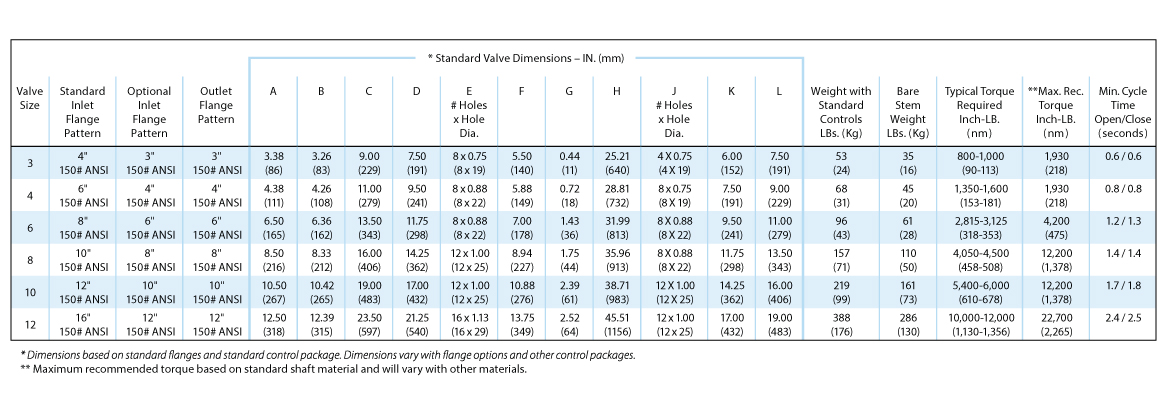
Roto-Disc® Valve with Standard Controls & Standard Flange Arrangement